#smrgKİTABEVİ Islamic Intellectual Traditions : Theology Philosophy Sufism -
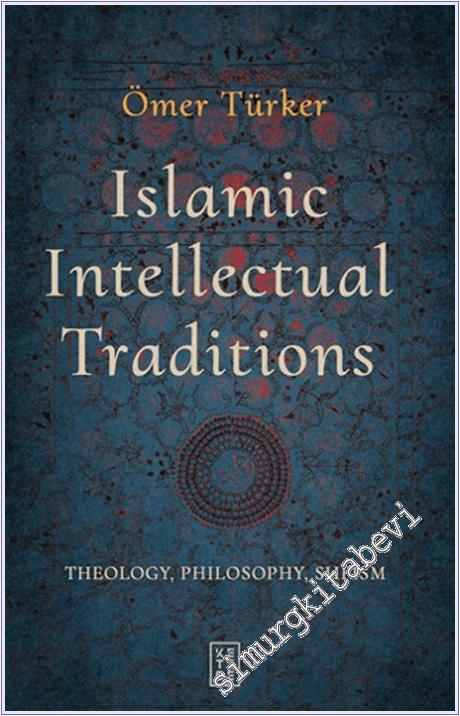
The present work by O¨mer Tu¨rker presents a comprehensive yet concise understanding of the great Islamic intellectual traditions of theology, philosophy, and Sufism, covering the areas of existence and ontology, the universe and cosmology, knowledge and epistemology, the nature of the human subject, and the relation between God and the universe. It explores the foundational principles of each of these traditions, undertakes a critical evaluation of their legacies, and presents the opportunities that they offer to humanity in our contemporary times. This impressive and practical handbook provides a synthetic understanding of the Islamic theological, philosophical, and Sufi traditions. These three are historically and intellectually posited, embodying each a particular “language” by which to express a unitive view of Reality. Such synthesis is certainly only made possible by the author's thorough understanding of the underlying order of the sciences anchored in metaphysics. The ability to simultaneously address the intelligent and interested reader, as well as the specialist, is one of the remarkable achievements that this work presents.
Dr. Karim Lahham
Senior Research Fellow, Tabah Foundation
The present work by O¨mer Tu¨rker presents a comprehensive yet concise understanding of the great Islamic intellectual traditions of theology, philosophy, and Sufism, covering the areas of existence and ontology, the universe and cosmology, knowledge and epistemology, the nature of the human subject, and the relation between God and the universe. It explores the foundational principles of each of these traditions, undertakes a critical evaluation of their legacies, and presents the opportunities that they offer to humanity in our contemporary times. This impressive and practical handbook provides a synthetic understanding of the Islamic theological, philosophical, and Sufi traditions. These three are historically and intellectually posited, embodying each a particular “language” by which to express a unitive view of Reality. Such synthesis is certainly only made possible by the author's thorough understanding of the underlying order of the sciences anchored in metaphysics. The ability to simultaneously address the intelligent and interested reader, as well as the specialist, is one of the remarkable achievements that this work presents.
Dr. Karim Lahham
Senior Research Fellow, Tabah Foundation