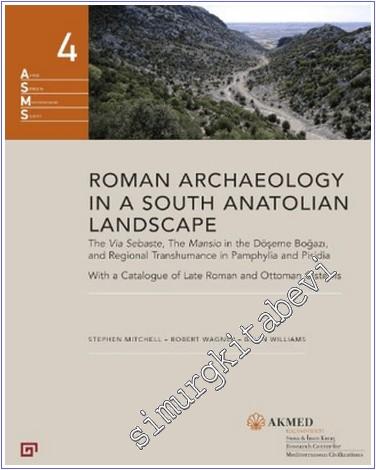
#smrgKİTABEVİ Roman Archaeology in a South Anatolian Landscape - 2024
Editör:
Kondisyon:
Yeni
Sunuş / Önsöz / Sonsöz / Giriş:
Basıldığı Matbaa:
Dizi Adı:
AKMED Series in Mediterranean Studies (ASMS) - 4
ISBN-10:
6057685728
Kargoya Teslim Süresi (İş Günü):
3&7
Hazırlayan:
Cilt:
Amerikan Cilt
Ciltçi:
Boyut:
20x28
Sayfa Sayısı:
198
Basım Yeri:
İstanbul
Baskı:
1
Basım Tarihi:
2024
Kapak Türü:
Karton Kapak
Kağıt Türü:
Enso
Dili:
İngilizce
Kategori:
indirimli
1.350,00
Havale/EFT ile:
1.323,00
Temin süresi 4&5 gündür.
1199226716
613522

https://www.simurgkitabevi.com/roman-archaeology-in-a-south-anatolian-landscape-2024
Roman Archaeology in a South Anatolian Landscape - 2024 #smrgKİTABEVİ
1350
50 renkli levha, 200 resim, 11 çizim, 17 harita
An investigation of a Roman road-station in its archaeological and geographical context that provides a new perspective on the historical landscape of southern Anatolia.
This study is based on fieldwork carried out during the 1990s in southwest Türkiye in the modern vilayets of Burdur and Antalya, and it focuses on the settlements associated with a Roman mansio located in the Döseme Bogazi, the pass that linked Pisidia with the coastal region of Pamphylia. The course of the road and the structures that emerged along it were defined not by the evolution of Pisidia's Hellenized indigenous culture but by the priorities of Roman rule, especially during late antiquity. Furthermore, the study of the road where the mansio was located raises fundamental questions about the role played by this mountain pass in the movement of people and animals between the lowlands and highlands of South-west Anatolia.
An investigation of a Roman road-station in its archaeological and geographical context that provides a new perspective on the historical landscape of southern Anatolia.
This study is based on fieldwork carried out during the 1990s in southwest Türkiye in the modern vilayets of Burdur and Antalya, and it focuses on the settlements associated with a Roman mansio located in the Döseme Bogazi, the pass that linked Pisidia with the coastal region of Pamphylia. The course of the road and the structures that emerged along it were defined not by the evolution of Pisidia's Hellenized indigenous culture but by the priorities of Roman rule, especially during late antiquity. Furthermore, the study of the road where the mansio was located raises fundamental questions about the role played by this mountain pass in the movement of people and animals between the lowlands and highlands of South-west Anatolia.
50 renkli levha, 200 resim, 11 çizim, 17 harita
An investigation of a Roman road-station in its archaeological and geographical context that provides a new perspective on the historical landscape of southern Anatolia.
This study is based on fieldwork carried out during the 1990s in southwest Türkiye in the modern vilayets of Burdur and Antalya, and it focuses on the settlements associated with a Roman mansio located in the Döseme Bogazi, the pass that linked Pisidia with the coastal region of Pamphylia. The course of the road and the structures that emerged along it were defined not by the evolution of Pisidia's Hellenized indigenous culture but by the priorities of Roman rule, especially during late antiquity. Furthermore, the study of the road where the mansio was located raises fundamental questions about the role played by this mountain pass in the movement of people and animals between the lowlands and highlands of South-west Anatolia.
An investigation of a Roman road-station in its archaeological and geographical context that provides a new perspective on the historical landscape of southern Anatolia.
This study is based on fieldwork carried out during the 1990s in southwest Türkiye in the modern vilayets of Burdur and Antalya, and it focuses on the settlements associated with a Roman mansio located in the Döseme Bogazi, the pass that linked Pisidia with the coastal region of Pamphylia. The course of the road and the structures that emerged along it were defined not by the evolution of Pisidia's Hellenized indigenous culture but by the priorities of Roman rule, especially during late antiquity. Furthermore, the study of the road where the mansio was located raises fundamental questions about the role played by this mountain pass in the movement of people and animals between the lowlands and highlands of South-west Anatolia.
Yorum yaz
Bu kitabı henüz kimse eleştirmemiş.