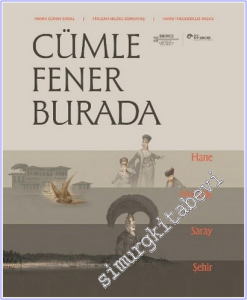
#smrgKİTABEVİ All Phanar is Here : Household Neighborhood Court City -
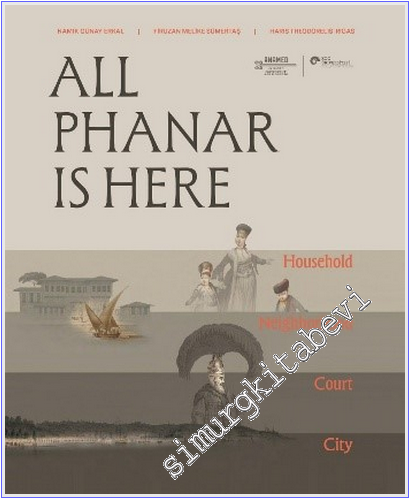
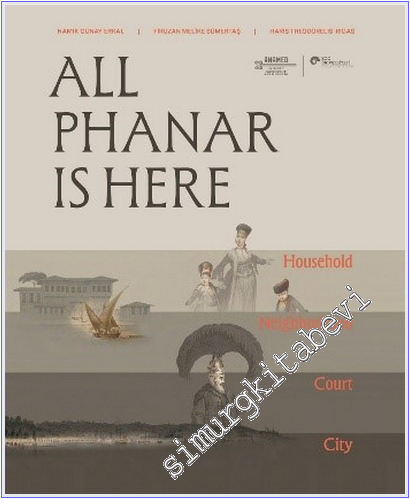
The essays trace the Phanariots - those beys appointed as rulers (princes or voivodes) of Wallachia and Moldavia during the “long” eighteenth century of the Ottoman Empire - their families, and the extensive networks of power surrounding them, together with their spatial and cultural traces. Beginning from the houses they inhabited in Phanar, Istanbul, and extending along the routes leading to Wallachia and Moldavia and back to the Bosphorus, the contributions examine the Phanariots through a variety of themes. Particular attention is devoted to their unique and privileged position within the Ottoman imperial system, their intertwined existence with local elites in Wallachia and Moldavia, their patronage practices and ceremonial culture, their literary and musical production, and their traces within the urban landscapes of Istanbul and Bucharest.
While making the Phanariots and the heritage they left behind more visible within the fields of history and art history, this exhibition book also discusses the methodological and curatorial challenges involved in reconstructing, reuniting, and exhibiting the fragmented and dispersed remains of their material culture.
The essays trace the Phanariots - those beys appointed as rulers (princes or voivodes) of Wallachia and Moldavia during the “long” eighteenth century of the Ottoman Empire - their families, and the extensive networks of power surrounding them, together with their spatial and cultural traces. Beginning from the houses they inhabited in Phanar, Istanbul, and extending along the routes leading to Wallachia and Moldavia and back to the Bosphorus, the contributions examine the Phanariots through a variety of themes. Particular attention is devoted to their unique and privileged position within the Ottoman imperial system, their intertwined existence with local elites in Wallachia and Moldavia, their patronage practices and ceremonial culture, their literary and musical production, and their traces within the urban landscapes of Istanbul and Bucharest.
While making the Phanariots and the heritage they left behind more visible within the fields of history and art history, this exhibition book also discusses the methodological and curatorial challenges involved in reconstructing, reuniting, and exhibiting the fragmented and dispersed remains of their material culture.