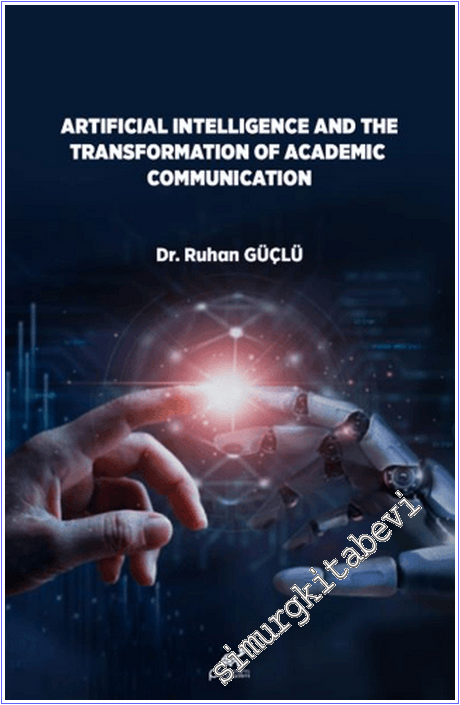
#smrgKİTABEVİ Artificial lntelligence And The Transformation Of Academic Communication - 2026
Editör:
Kondisyon:
Yeni
Sunuş / Önsöz / Sonsöz / Giriş:
Basıldığı Matbaa:
Dizi Adı:
ISBN-10:
Hazırlayan:
Cilt:
Amerikan Cilt
Ciltçi:
Boyut:
15x21
Sayfa Sayısı:
142
Basım Yeri:
Çanakkale
Baskı:
1
Basım Tarihi:
2026
Kapak Türü:
Karton Kapak
Kağıt Türü:
Enso
Dili:
İngilizce
Kategori:
indirimli
255,20
Havale/EFT ile:
250,10
Temin süresi 4&6 gündür.
1199260438
648109
https://www.simurgkitabevi.com/artificial-lntelligence-and-the-transformation-of-academic-communication-2026
Artificial lntelligence And The Transformation Of Academic Communication - 2026 #smrgKİTABEVİ
255.2
In recent years, developments in artificial intelligence have begun to influence many aspects of academic life. In particular, generative artifical intelligence (GenAI) systems and large language models are increasingly used in research and higher education. These technologies can summarize articles, generate paragraphs, and assist in drafting academic texts. As a result, artificial intelligence is no longer discussed only as a technological innovation; rather, it has become part of the communicative environment in which academic discourse is produced. Indeed, the presence of AI in writing practices invites us to reconsider how scholarly communication itself operates. At this point, we may ask a simple but important question: what happens when systems that do not belong to academic communities begin to participate in the production of academic discourse? Academic writing has traditionally been understood as a communicative practice through which scholars construct arguments, evaluate evidence, and guide readers through complex reasoning. In other words, writing is not merely the presentation of information; it is also a rhetorical process through which writers position themselves and interact with readers.
In recent years, developments in artificial intelligence have begun to influence many aspects of academic life. In particular, generative artifical intelligence (GenAI) systems and large language models are increasingly used in research and higher education. These technologies can summarize articles, generate paragraphs, and assist in drafting academic texts. As a result, artificial intelligence is no longer discussed only as a technological innovation; rather, it has become part of the communicative environment in which academic discourse is produced. Indeed, the presence of AI in writing practices invites us to reconsider how scholarly communication itself operates. At this point, we may ask a simple but important question: what happens when systems that do not belong to academic communities begin to participate in the production of academic discourse? Academic writing has traditionally been understood as a communicative practice through which scholars construct arguments, evaluate evidence, and guide readers through complex reasoning. In other words, writing is not merely the presentation of information; it is also a rhetorical process through which writers position themselves and interact with readers.
Yorum yaz
Bu kitabı henüz kimse eleştirmemiş.