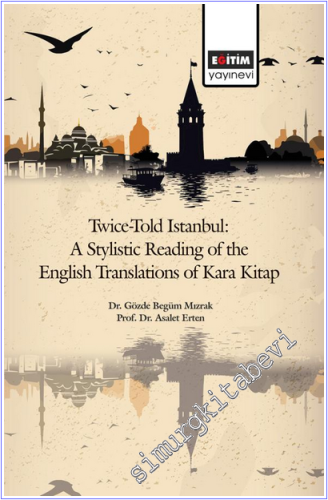
#smrgKİTABEVİ Twice-Told İstanbul : a Stylistic Reading of the English Translations of Kara Kitap - 2025
Editör:
Kondisyon:
Yeni
Sunuş / Önsöz / Sonsöz / Giriş:
Basıldığı Matbaa:
Dizi Adı:
ISBN-10:
9786253855505
Hazırlayan:
Cilt:
Amerikan Cilt
Ciltçi:
Boyut:
16x24
Sayfa Sayısı:
133
Basım Yeri:
Konya
Baskı:
1
Basım Tarihi:
2025
Kapak Türü:
Karton Kapak
Kağıt Türü:
Enso
Dili:
Türkçe
Kategori:
indirimli
269,10
Havale/EFT ile:
263,72
Temin süresi 4&6 gündür.
1199257861
645519
https://www.simurgkitabevi.com/twice-told-istanbul-a-stylistic-reading-of-the-english-translations-of-kara-kitap-2025
Twice-Told İstanbul : a Stylistic Reading of the English Translations of Kara Kitap - 2025 #smrgKİTABEVİ
269.1
Orhan Pamuk's masterpiece Kara Kitap has long attracted attention of readers worldwide, which reached even a wider audience following its retranslation into English in the early 20s. With its playful, dense and stylistically complex language decorated with vernaculars, idioms and invented words by Pamuk, Kara Kitap presents itself as a demanding task for translation. As Pamuk's narrative voice moves across linguistic and cultural borders, does it bring along its distinctive resonances? This book calls its readers for a curious expedition to explore Pamuk's stylistic choices and their reflections in its two English translations by Güneli Gün (1994) and Maureen Freely (2006). Through a comparative stylistic analysis, which is based on Antoine Berman's Analytic of Translation, a close textual analysis is provided with selected examples from the source and target texts.
The book consists of three chapters along with an introduction and conclusion: The first chapter gives information regarding style, stylistics and the methodological framework that shapes them. It, then, outlines Antoine Berman's Analytic of Translation and explains its twelve deforming tendencies in detail. The second chapter focuses on delivering background information on Orhan Pamuk's personal and literary life as well as introducing the two translators of Kara Kitap, Güneli Gün and Maureen Freely, respectively. Further in the chapter, the plot of Kara Kitap and Pamuk's distinctive style in it are expanded on. Finally, the third chapter elaborates on the comparative and stylistic analysis of Kara Kitap and its English translations, both entitled The Black Book, supported with selected examples to offer comprehensive insight and understanding for the reader.
Ultimately, this book is aimed to serve as a useful source for scholars, students, translators and those who are interested in the sophisticated relationship between style and translation; and they are kindly invited to assess Pamuk's renowned work of art with a renewed appreciation.
The book consists of three chapters along with an introduction and conclusion: The first chapter gives information regarding style, stylistics and the methodological framework that shapes them. It, then, outlines Antoine Berman's Analytic of Translation and explains its twelve deforming tendencies in detail. The second chapter focuses on delivering background information on Orhan Pamuk's personal and literary life as well as introducing the two translators of Kara Kitap, Güneli Gün and Maureen Freely, respectively. Further in the chapter, the plot of Kara Kitap and Pamuk's distinctive style in it are expanded on. Finally, the third chapter elaborates on the comparative and stylistic analysis of Kara Kitap and its English translations, both entitled The Black Book, supported with selected examples to offer comprehensive insight and understanding for the reader.
Ultimately, this book is aimed to serve as a useful source for scholars, students, translators and those who are interested in the sophisticated relationship between style and translation; and they are kindly invited to assess Pamuk's renowned work of art with a renewed appreciation.
Orhan Pamuk's masterpiece Kara Kitap has long attracted attention of readers worldwide, which reached even a wider audience following its retranslation into English in the early 20s. With its playful, dense and stylistically complex language decorated with vernaculars, idioms and invented words by Pamuk, Kara Kitap presents itself as a demanding task for translation. As Pamuk's narrative voice moves across linguistic and cultural borders, does it bring along its distinctive resonances? This book calls its readers for a curious expedition to explore Pamuk's stylistic choices and their reflections in its two English translations by Güneli Gün (1994) and Maureen Freely (2006). Through a comparative stylistic analysis, which is based on Antoine Berman's Analytic of Translation, a close textual analysis is provided with selected examples from the source and target texts.
The book consists of three chapters along with an introduction and conclusion: The first chapter gives information regarding style, stylistics and the methodological framework that shapes them. It, then, outlines Antoine Berman's Analytic of Translation and explains its twelve deforming tendencies in detail. The second chapter focuses on delivering background information on Orhan Pamuk's personal and literary life as well as introducing the two translators of Kara Kitap, Güneli Gün and Maureen Freely, respectively. Further in the chapter, the plot of Kara Kitap and Pamuk's distinctive style in it are expanded on. Finally, the third chapter elaborates on the comparative and stylistic analysis of Kara Kitap and its English translations, both entitled The Black Book, supported with selected examples to offer comprehensive insight and understanding for the reader.
Ultimately, this book is aimed to serve as a useful source for scholars, students, translators and those who are interested in the sophisticated relationship between style and translation; and they are kindly invited to assess Pamuk's renowned work of art with a renewed appreciation.
The book consists of three chapters along with an introduction and conclusion: The first chapter gives information regarding style, stylistics and the methodological framework that shapes them. It, then, outlines Antoine Berman's Analytic of Translation and explains its twelve deforming tendencies in detail. The second chapter focuses on delivering background information on Orhan Pamuk's personal and literary life as well as introducing the two translators of Kara Kitap, Güneli Gün and Maureen Freely, respectively. Further in the chapter, the plot of Kara Kitap and Pamuk's distinctive style in it are expanded on. Finally, the third chapter elaborates on the comparative and stylistic analysis of Kara Kitap and its English translations, both entitled The Black Book, supported with selected examples to offer comprehensive insight and understanding for the reader.
Ultimately, this book is aimed to serve as a useful source for scholars, students, translators and those who are interested in the sophisticated relationship between style and translation; and they are kindly invited to assess Pamuk's renowned work of art with a renewed appreciation.
Yorum yaz
Bu kitabı henüz kimse eleştirmemiş.