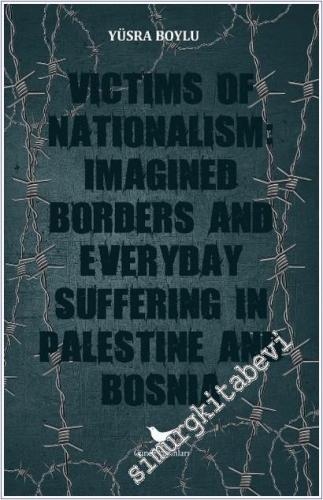
#smrgKİTABEVİ Victims of Nationalism : Imagined Borders and Everyday Suffering in Palestine and Bosnia - 2026
Editör:
Kondisyon:
Yeni
Sunuş / Önsöz / Sonsöz / Giriş:
Basıldığı Matbaa:
Dizi Adı:
ISBN-10:
9786255613813
Hazırlayan:
Cilt:
Amerikan Cilt
Boyut:
14x21
Sayfa Sayısı:
94
Basım Yeri:
Muğla
Baskı:
1
Basım Tarihi:
2026
Kapak Türü:
Karton Kapak
Kağıt Türü:
Enso
Dili:
İngilizce
Kategori:
indirimli
187,50
Havale/EFT ile:
183,75
Siparişiniz 4&6 iş günü arasında kargoda
1199256643
644236
https://www.simurgkitabevi.com/victims-of-nationalism-imagined-borders-and-everyday-suffering-in-palestine-and-bosnia-2026
Victims of Nationalism : Imagined Borders and Everyday Suffering in Palestine and Bosnia - 2026 #smrgKİTABEVİ
187.5
“History has a way of turning peoples who have endured the same suffering into strangers -and sometimes enemies- of one another.
A lemon tree uprooted from its soil, or a Sevdalinka echoing as a song of longing, reminds us that pain, when acknowledged, can unite, but when denied, becomes an inheritance of violence.
Those who once bore the weight of exclusion and discrimination often reproduce the very injustices inflicted upon them, despite shared memories, landscapes, and cultural bonds.
In such moments, nationalism ceases to be a source of belonging and emerges instead as an artificial instrument that fractures humanity.
By bringing historical experience into dialogue with narrative representation, this work argues that the possibility of coexistence does not arise from mere tolerance of the other, but from recognizing the other as fully human.”
A lemon tree uprooted from its soil, or a Sevdalinka echoing as a song of longing, reminds us that pain, when acknowledged, can unite, but when denied, becomes an inheritance of violence.
Those who once bore the weight of exclusion and discrimination often reproduce the very injustices inflicted upon them, despite shared memories, landscapes, and cultural bonds.
In such moments, nationalism ceases to be a source of belonging and emerges instead as an artificial instrument that fractures humanity.
By bringing historical experience into dialogue with narrative representation, this work argues that the possibility of coexistence does not arise from mere tolerance of the other, but from recognizing the other as fully human.”
“History has a way of turning peoples who have endured the same suffering into strangers -and sometimes enemies- of one another.
A lemon tree uprooted from its soil, or a Sevdalinka echoing as a song of longing, reminds us that pain, when acknowledged, can unite, but when denied, becomes an inheritance of violence.
Those who once bore the weight of exclusion and discrimination often reproduce the very injustices inflicted upon them, despite shared memories, landscapes, and cultural bonds.
In such moments, nationalism ceases to be a source of belonging and emerges instead as an artificial instrument that fractures humanity.
By bringing historical experience into dialogue with narrative representation, this work argues that the possibility of coexistence does not arise from mere tolerance of the other, but from recognizing the other as fully human.”
A lemon tree uprooted from its soil, or a Sevdalinka echoing as a song of longing, reminds us that pain, when acknowledged, can unite, but when denied, becomes an inheritance of violence.
Those who once bore the weight of exclusion and discrimination often reproduce the very injustices inflicted upon them, despite shared memories, landscapes, and cultural bonds.
In such moments, nationalism ceases to be a source of belonging and emerges instead as an artificial instrument that fractures humanity.
By bringing historical experience into dialogue with narrative representation, this work argues that the possibility of coexistence does not arise from mere tolerance of the other, but from recognizing the other as fully human.”
Yorum yaz
Bu kitabı henüz kimse eleştirmemiş.