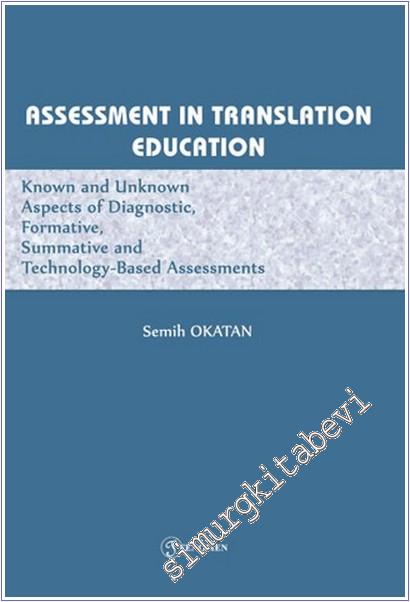
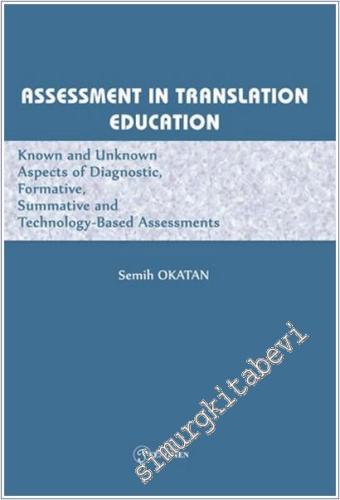
#smrgKİTABEVİ Assessment in Translation Education - 2025
Editör:
Kondisyon:
Yeni
Sunuş / Önsöz / Sonsöz / Giriş:
Dizi Adı:
ISBN-10:
9786255527356
Hazırlayan:
Cilt:
Amerikan Cilt
Ciltçi:
Boyut:
14x21
Sayfa Sayısı:
126
Basım Yeri:
Erzurum
Baskı:
1
Basım Tarihi:
2025
Kapak Türü:
Karton Kapak
Kağıt Türü:
Enso
Dili:
İngilizce
Kategori:
indirimli
191,88
Havale/EFT ile:
188,04
Temin süresi 4&6 gündür.
1199253064
640186
https://www.simurgkitabevi.com/assessment-in-translation-education-2025
Assessment in Translation Education - 2025 #smrgKİTABEVİ
191.88
PREFACE
Purpose
This book presents the framework of the basic parameters of diagnostic, formative, and summative assessment. Based on the basic parameters of these three types of assessment, it defines how it is applied in the context of translation education and what the strengths and weaknesses of the assessment process are in the translator training process. Additionally, it aligns the assessment process with technology by focusing on ethical concerns, particularly those related to the use of AI. The highlighted issues related to the assessment process provide a better understanding of how assessment can be designed practically in an educational context. Furthermore, it discusses how assessment can be transformed into an effective learning tool in translation education.
Audience
This book is intended for academicians involved in the translator training process. It offers them a comprehensive source of theoretical understanding and pedagogical applications in translation education. At a broader level, this book can also be used as a resource by educators and scholars who tend to explore innovative approaches in assessment. Furthermore, teachers in K-12 education may also benefit from this book, as it presents a theoretical depiction of the assessment process in line with the recent studies conducted in the educational context.
Outline of the Chapters
Chapter 1 focuses on diagnostic assessment, which is the initial stage of the assessment process. In this chapter, the basic parameters of diagnostic assessment are defined and integrated with translation education in line with methodological and pedagogical considerations. Beyond its primary definition and application, this chapter presents how diagnostic assessment functions to define a student's current position at the beginning of an educational process, particularly in translation education. Furthermore, it sheds light on the pedagogical approaches of educators and offers an effective assessment process that supports learning at the outset of the instructional period in translation education.
Chapter 2 focuses on formative assessment, which aims to create a constructivist aspect for an ongoing learning process while holistically assessing students. This chapter presents the core knowledge of formative assessment and aligns its procedures with translation education. In doing so, it tends to guide instructors to create a learning setting where translation students take an active role in the learning process by going through self-regulation. In addition, this chapter sheds light on how translation students are oriented to improve their translation competence within the framework of the dynamic process of translation.
Chapter 3 deals with the basic parameters of summative assessment and its integration with translation education. This chapter explains which criteria are considered in the assessment to be applied at the end of the learning process. Furthermore, it offers a comprehensive view of how summative assessment is structured or restructured in the translator training process to meet the academic standards in the translator training programs.
Chapter 4 handles the subject of technology in the assessment process. It discusses the alignment of technology with assessment and the ever-evolving role of machine translation. In addition, it focuses on the use of AI in the translation process and the ethical concerns that may arise from the use of AI in the assessment process.
Chapter 5 recaps the diagnostic, formative, and summative assessment procedures in line with the tables and figures. It involves critical views on the assessment process parameters and draws a pedagogical framework for the application of assessment in the translator training process. In addition, it offers a guiding path to construct an effective assessment process in translation education.
Purpose
This book presents the framework of the basic parameters of diagnostic, formative, and summative assessment. Based on the basic parameters of these three types of assessment, it defines how it is applied in the context of translation education and what the strengths and weaknesses of the assessment process are in the translator training process. Additionally, it aligns the assessment process with technology by focusing on ethical concerns, particularly those related to the use of AI. The highlighted issues related to the assessment process provide a better understanding of how assessment can be designed practically in an educational context. Furthermore, it discusses how assessment can be transformed into an effective learning tool in translation education.
Audience
This book is intended for academicians involved in the translator training process. It offers them a comprehensive source of theoretical understanding and pedagogical applications in translation education. At a broader level, this book can also be used as a resource by educators and scholars who tend to explore innovative approaches in assessment. Furthermore, teachers in K-12 education may also benefit from this book, as it presents a theoretical depiction of the assessment process in line with the recent studies conducted in the educational context.
Outline of the Chapters
Chapter 1 focuses on diagnostic assessment, which is the initial stage of the assessment process. In this chapter, the basic parameters of diagnostic assessment are defined and integrated with translation education in line with methodological and pedagogical considerations. Beyond its primary definition and application, this chapter presents how diagnostic assessment functions to define a student's current position at the beginning of an educational process, particularly in translation education. Furthermore, it sheds light on the pedagogical approaches of educators and offers an effective assessment process that supports learning at the outset of the instructional period in translation education.
Chapter 2 focuses on formative assessment, which aims to create a constructivist aspect for an ongoing learning process while holistically assessing students. This chapter presents the core knowledge of formative assessment and aligns its procedures with translation education. In doing so, it tends to guide instructors to create a learning setting where translation students take an active role in the learning process by going through self-regulation. In addition, this chapter sheds light on how translation students are oriented to improve their translation competence within the framework of the dynamic process of translation.
Chapter 3 deals with the basic parameters of summative assessment and its integration with translation education. This chapter explains which criteria are considered in the assessment to be applied at the end of the learning process. Furthermore, it offers a comprehensive view of how summative assessment is structured or restructured in the translator training process to meet the academic standards in the translator training programs.
Chapter 4 handles the subject of technology in the assessment process. It discusses the alignment of technology with assessment and the ever-evolving role of machine translation. In addition, it focuses on the use of AI in the translation process and the ethical concerns that may arise from the use of AI in the assessment process.
Chapter 5 recaps the diagnostic, formative, and summative assessment procedures in line with the tables and figures. It involves critical views on the assessment process parameters and draws a pedagogical framework for the application of assessment in the translator training process. In addition, it offers a guiding path to construct an effective assessment process in translation education.
PREFACE
Purpose
This book presents the framework of the basic parameters of diagnostic, formative, and summative assessment. Based on the basic parameters of these three types of assessment, it defines how it is applied in the context of translation education and what the strengths and weaknesses of the assessment process are in the translator training process. Additionally, it aligns the assessment process with technology by focusing on ethical concerns, particularly those related to the use of AI. The highlighted issues related to the assessment process provide a better understanding of how assessment can be designed practically in an educational context. Furthermore, it discusses how assessment can be transformed into an effective learning tool in translation education.
Audience
This book is intended for academicians involved in the translator training process. It offers them a comprehensive source of theoretical understanding and pedagogical applications in translation education. At a broader level, this book can also be used as a resource by educators and scholars who tend to explore innovative approaches in assessment. Furthermore, teachers in K-12 education may also benefit from this book, as it presents a theoretical depiction of the assessment process in line with the recent studies conducted in the educational context.
Outline of the Chapters
Chapter 1 focuses on diagnostic assessment, which is the initial stage of the assessment process. In this chapter, the basic parameters of diagnostic assessment are defined and integrated with translation education in line with methodological and pedagogical considerations. Beyond its primary definition and application, this chapter presents how diagnostic assessment functions to define a student's current position at the beginning of an educational process, particularly in translation education. Furthermore, it sheds light on the pedagogical approaches of educators and offers an effective assessment process that supports learning at the outset of the instructional period in translation education.
Chapter 2 focuses on formative assessment, which aims to create a constructivist aspect for an ongoing learning process while holistically assessing students. This chapter presents the core knowledge of formative assessment and aligns its procedures with translation education. In doing so, it tends to guide instructors to create a learning setting where translation students take an active role in the learning process by going through self-regulation. In addition, this chapter sheds light on how translation students are oriented to improve their translation competence within the framework of the dynamic process of translation.
Chapter 3 deals with the basic parameters of summative assessment and its integration with translation education. This chapter explains which criteria are considered in the assessment to be applied at the end of the learning process. Furthermore, it offers a comprehensive view of how summative assessment is structured or restructured in the translator training process to meet the academic standards in the translator training programs.
Chapter 4 handles the subject of technology in the assessment process. It discusses the alignment of technology with assessment and the ever-evolving role of machine translation. In addition, it focuses on the use of AI in the translation process and the ethical concerns that may arise from the use of AI in the assessment process.
Chapter 5 recaps the diagnostic, formative, and summative assessment procedures in line with the tables and figures. It involves critical views on the assessment process parameters and draws a pedagogical framework for the application of assessment in the translator training process. In addition, it offers a guiding path to construct an effective assessment process in translation education.
Purpose
This book presents the framework of the basic parameters of diagnostic, formative, and summative assessment. Based on the basic parameters of these three types of assessment, it defines how it is applied in the context of translation education and what the strengths and weaknesses of the assessment process are in the translator training process. Additionally, it aligns the assessment process with technology by focusing on ethical concerns, particularly those related to the use of AI. The highlighted issues related to the assessment process provide a better understanding of how assessment can be designed practically in an educational context. Furthermore, it discusses how assessment can be transformed into an effective learning tool in translation education.
Audience
This book is intended for academicians involved in the translator training process. It offers them a comprehensive source of theoretical understanding and pedagogical applications in translation education. At a broader level, this book can also be used as a resource by educators and scholars who tend to explore innovative approaches in assessment. Furthermore, teachers in K-12 education may also benefit from this book, as it presents a theoretical depiction of the assessment process in line with the recent studies conducted in the educational context.
Outline of the Chapters
Chapter 1 focuses on diagnostic assessment, which is the initial stage of the assessment process. In this chapter, the basic parameters of diagnostic assessment are defined and integrated with translation education in line with methodological and pedagogical considerations. Beyond its primary definition and application, this chapter presents how diagnostic assessment functions to define a student's current position at the beginning of an educational process, particularly in translation education. Furthermore, it sheds light on the pedagogical approaches of educators and offers an effective assessment process that supports learning at the outset of the instructional period in translation education.
Chapter 2 focuses on formative assessment, which aims to create a constructivist aspect for an ongoing learning process while holistically assessing students. This chapter presents the core knowledge of formative assessment and aligns its procedures with translation education. In doing so, it tends to guide instructors to create a learning setting where translation students take an active role in the learning process by going through self-regulation. In addition, this chapter sheds light on how translation students are oriented to improve their translation competence within the framework of the dynamic process of translation.
Chapter 3 deals with the basic parameters of summative assessment and its integration with translation education. This chapter explains which criteria are considered in the assessment to be applied at the end of the learning process. Furthermore, it offers a comprehensive view of how summative assessment is structured or restructured in the translator training process to meet the academic standards in the translator training programs.
Chapter 4 handles the subject of technology in the assessment process. It discusses the alignment of technology with assessment and the ever-evolving role of machine translation. In addition, it focuses on the use of AI in the translation process and the ethical concerns that may arise from the use of AI in the assessment process.
Chapter 5 recaps the diagnostic, formative, and summative assessment procedures in line with the tables and figures. It involves critical views on the assessment process parameters and draws a pedagogical framework for the application of assessment in the translator training process. In addition, it offers a guiding path to construct an effective assessment process in translation education.
Yorum yaz
Bu kitabı henüz kimse eleştirmemiş.